What is UNHU?
UNHU (also known as UBUNTU) is a profound Southern African philosophy that recognizes our shared humanity and interconnectedness. It teaches that "I am because we are" — a principle that transforms how organizations operate, lead, and create value.
The Origins of UNHU
UNHU is rooted in the traditional wisdom of the Shona people of Zimbabwe and the broader Bantu-speaking communities of Southern Africa. For centuries, this philosophy has guided communities in creating harmonious, sustainable, and prosperous societies.
The word UNHU literally translates to "humanness" or "personhood," but its meaning extends far beyond individual identity. It encompasses a holistic worldview that balances spiritual purpose, community relationships, personal character, and environmental stewardship.
In traditional African societies, UNHU was not just a philosophy—it was a practical framework for governance, conflict resolution, resource management, and social cohesion. Today, forward-thinking organizations worldwide are rediscovering its power to address modern challenges.
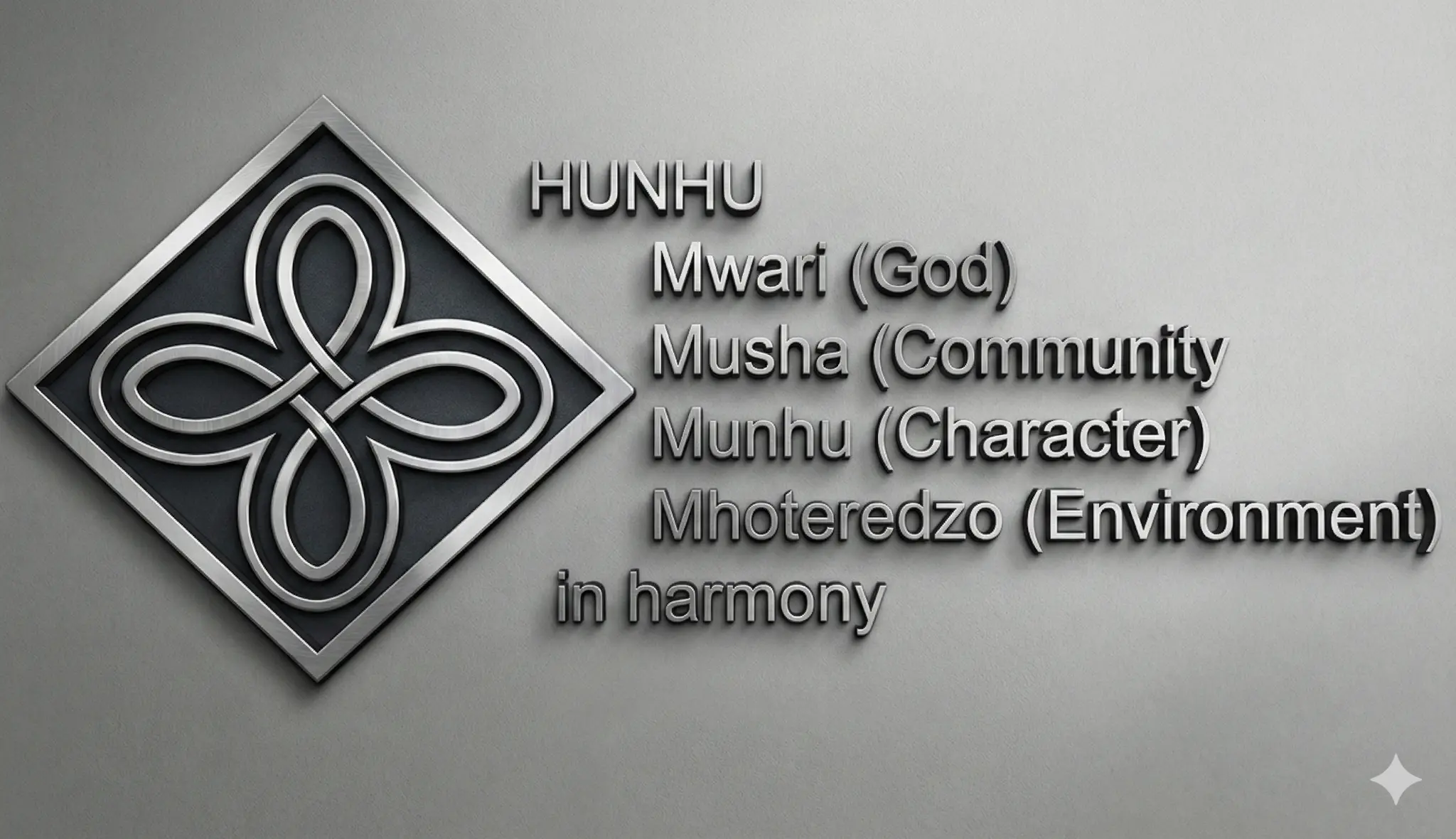
The Four Pillars of UNHU
UNHU is built on four interconnected pillars. When these pillars are in harmony, organizations achieve sustainable excellence and lasting impact.
Mwari (God / Spirituality)
The Foundation of Purpose
Mwari represents the spiritual dimension—the recognition that organizations exist for purposes beyond profit. It encompasses ethical principles, moral governance, and the pursuit of transcendent values that guide decision-making.
In Practice: Organizations with strong Mwari demonstrate integrity in all dealings, operate with transparency, align their mission with societal good, and make decisions based on principles rather than expediency.
Result: Stakeholder trust, ethical reputation, and long-term sustainability
Musha (Community)
The Power of Belonging
Musha embodies the principle that "I am because we are." It recognizes that organizations thrive when they actively contribute to the well-being of all stakeholders—employees, customers, suppliers, and the broader community.
In Practice: Organizations invest in employee development, engage meaningfully with local communities, practice fair trade with suppliers, and measure success by stakeholder well-being, not just shareholder returns.
Result: Loyal employees, community support, and resilient stakeholder relationships
Munhu (Character)
The Essence of Excellence
Munhu refers to the quality of character—both individual and organizational. It encompasses integrity, compassion, respect, humility, and the continuous pursuit of personal and collective growth.
In Practice: Organizations cultivate cultures of respect, invest in character development alongside skills training, practice servant leadership, and create environments where people can bring their whole selves to work.
Result: Strong organizational culture, high employee engagement, and authentic leadership
Mhoteredzo (Environment)
Stewardship for Future Generations
Mhoteredzo embodies environmental stewardship and the responsibility to preserve resources for future generations. It recognizes that we are temporary custodians of the Earth, not its owners.
In Practice: Organizations minimize environmental impact, adopt sustainable practices, invest in renewable resources, measure and reduce their carbon footprint, and actively contribute to environmental restoration.
Result: Environmental sustainability, regulatory compliance, and appeal to conscious consumers
Why UNHU Matters in Modern Organizations
In an era of stakeholder capitalism, ESG requirements, and conscious consumerism, UNHU provides a proven framework for organizations to thrive while creating positive impact.
Addresses Modern Challenges
Climate crisis, inequality, mental health, and trust deficits—UNHU provides holistic solutions to interconnected problems that siloed approaches cannot solve.
Drives Business Performance
Research shows organizations with strong purpose, community engagement, character, and sustainability outperform peers in profitability, innovation, and resilience.
Meets Stakeholder Expectations
Employees, customers, investors, and communities increasingly demand organizations demonstrate values beyond profit. UNHU provides a credible framework.
Competitive Differentiation
UNHU Kitemark certification sets you apart in tenders, recruitment, and market positioning as an organization with verified commitment to excellence.
How UNHU Drives Organizational Success
Organizations that embrace UNHU principles experience measurable improvements across key performance indicators.
Enhanced Employee Engagement & Retention
When employees feel they belong to a community (Musha), work in an environment that values character (Munhu), and contribute to meaningful purpose (Mwari), engagement soars. UNHU-certified organizations report 87% higher employee satisfaction and 65% better retention.
Stronger Brand Reputation & Customer Loyalty
Third-party UNHU certification proves your values are real, not marketing. Organizations see increased customer trust, positive word-of-mouth, and preference over competitors—especially among conscious consumers who represent growing market segments.
Access to Capital & Contracts
Impact investors, ESG funds, and government tenders increasingly require verified sustainability and social responsibility. UNHU Kitemark opens doors to funding and contracts that competitors without certification cannot access.
Innovation & Adaptability
Organizations grounded in UNHU principles foster psychological safety, diverse perspectives, and collaborative problem-solving. This culture of trust and character (Munhu) drives innovation and enables rapid adaptation to change.
Long-term Sustainability & Resilience
By balancing purpose, people, character, and planet, UNHU organizations build resilience against economic shocks, regulatory changes, and social disruptions. They think in generations, not quarters.
Community Support & Social License
Organizations that invest in community well-being (Musha) and environmental stewardship (Mhoteredzo) earn a "social license to operate"—community support that protects against opposition and creates collaborative opportunities.
The Evidence is Clear
Higher profitability for purpose-driven companies (Harvard Business School)
Of consumers will boycott brands that don't align with their values (Edelman Trust Barometer)
Stock performance of companies with strong ESG practices (MSCI Research)
UNHU provides a comprehensive framework that addresses all dimensions of stakeholder capitalism—proven to drive both impact and financial performance.